The term model can also apply to something that acts on rules described
by a concept model. This is called a "dynamic model". For example:
A concept model of highway congestion: Traffic congestion is due to people
driving fast enough that they catch up to the person in front of them, causing
them to slow down more than necessary resulting in congestion.
A dynamic model of highway congestion: A computer could simulate this behavior
buy having shapes on the screen move according to the rule of accelerating
until meeting another shape. This second type of model is a dynamic model
which can be used to see if the congestion does actually result from this
type of driving behavior. The person setting up the model can now change various
parameters like, how many cars, how fast they drive, how many lanes there
are, etc.
Click on the image to see a dynamic model of traffic congestion in action:
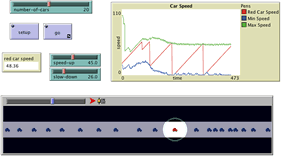
Model created at the MIT Media lab. Copyright 1997 by Uri Wilensky. All rights reserved. See http://ccl.northwestern.edu/netlogo/models/TrafficBasic for terms of use.